edam
in left perspective

Sunday, 23 February 2020

'Literature Festivals'


Dumping grounds for a rotten political culture

M. P. Balaram


Truth cannot always be hidden beneath the golden pots of lies. Witches of 'evildom' sometimes come out of their night caves. Gods of Truth and wisdom do sometimes show us the ritualistic dance of evil beings in broad daylight, in front of our very own eyes. It seems that nobody is yet aware of the significance of this 'Macabre' dance play. As a result, the most literate and culturally developed state is now under threat of a most dangerous kind .This virus can spread and infect everything we own – not only the mind and spirit but the very ethos of a whole population. Our cultural and political identity itself is in danger.

Evil has now decided to remould the God's own country in its own shape and image. No doubt about it. Hell is the new role-model of this God's own paradise. Otherwise, how can we justify the surrender of the whole legacy of our 'great literature and art' for a simple price of fame and fortune.  How can we legitimise the loss of art's aura of truth, wisdom, ethics, and integrity? When art and literature is lost and surrendered, people are the ultimate losers. Each and every mantle of culture is then lost and once again we are metamorphosed into either naked chimpanzees or simple savages. Literature/Art/Culture festivals of the day are clear manifestations of an infectious virus of a special kind that dangerously spreads and causes the extinction of Art/Culture/Literature itself. Surrendering oneself for fame and fortune and for a 'reasonable price' ultimately begets nullified, neutralised, castrated, perverted, ornamental art. Festival venues has become the new avenues or dumping grounds for discarding the last remains of a ‘rotten’ political culture. So ultimately this is not a cultural issue. Politics of the festivals is to be followed and studied properly.

The young writer – honoured, rewarded and appreciated in current fests – undergoes a qualitative metabolic change of his conscience. He is treated as an alien, as an elevated phenomenon, or as a prototypical specimen. All his innate potential to evolve as an integrated, creative person is snuffed out at the moment of his transformation/degradation into narcissistic showmanship. Festivals prepare the most favourable ground for building nonsensical celebrity images in the field of literature/art/culture. Its virus, once transmitted, cannot be easily treated and cured. The elevated podium meant for celebrating art is really meant for alienating art.

Now the young writer (and the young reader) has to choose: whether I ought to belong to an elite grouping whose only  concern is  about themselves, whose only belief is in the perverse  pleasure principle  of  narcissism  and whose  mind and spirit is immersed  in only  images of the ‘self’. His endless monologues are focused on I and he is always speaking to himself.   Imaging himself as a living legend, his lifelong action and talks are centred on one main subject: a capital I. Then the aura of fame and fortune begins to favour this God sent ‘Genius’, and he is soon elevated to heaven to become a member of the club of celebrities. But there is another option to choose for the young writer (also for the young reader): The choice of ‘Resistance, Rebellion, and Death'. It is a hell having no celebrities. Freedom is his birth right, and he will inscribe it on every word, sound, or colour he creates. With fire in spirit and action, he lives and works ‘dangerously’. He addresses the whole world and there are no barriers here for action or talk. Here he is one among the subjects and no one is subjected or surrendered in the name of a hierarchical order. So the word celebrity is treated here as a 'taboo'. In this universe of People's Art, elite festivals are also banned.

It was M. N. Vijayan who called these kind of 'charming', 'attractive' species as Swarna Malsyangal (Golden fish). Now in an the all-pervasive polluted air, water and soil, yesterday's 'innocent' tamed fish have been transformed in to cruel biting sharks .They bite or swallow you either partly or wholly. Blood, i.e. the blood of the 'different other', is treated as the most tasty and nutritious food. The only command they obey is that of their ruling bosses, those who gives them fame and fortune. All others, irrespective of left or right, are considered as mere insects. I am the most beautiful name in the world. You are the most hated. Slavery is my accepted profession. Freedom is not at all seen in my profile.

Freedom is not ‘my’ choice. Prometheus, Spartucus, Bazarov, Reskalnikov – all those having the gene of resistance, rebellion (and heroic death) should be confiscated. All those models known as 'Classics' should be treated as pure manure. Whole History has only one value. You can either make use of it (for your benefit) or throw it as useless (also for your own interest). Most of the time history is a thing that should be wholly forgotten. Discourses centred on literature, art, form, content, sensibility, purposefulness etc. etc. are utter nonsense. But let them assert their own 'values' or 'non-values' and argue about its 'existence' or 'non-existence' repeatedly, endlessly. In the eyes of good marketing, every word uttered and even the non-uttered silences are potentially profitable. Even the preaching of heavenly morality or satanic evilness are sometimes profitable. Making use of morality and immorality, making each and every thing credible or incredible is itself an art. Net result should be emphasised: Profit. Therefore, my (festival) master and I (author celebrity) believe in one and only God – Profit. The God of fame and fortune! Long live our masters!  Long live I!

So a 'unique' and 'great' theory of culture production is being born out of Literature/Art/Culture festivals: the theory of the ‘making of pulp culture'. Whether it is great or petty, good or evil, truth or untruth, big or small, anything or everything could be made out of this fictional fluidity. Culture is treated as mere pulp, culture is viewed as mere pulp, moulded out of pulp, and a philosophy of culture is being manufactured as a final outcome of this chaos. As per its demand and sales, this culture pulp itself is marketed and sold as a novel product! The morally pauperised author is only good to be treated as mere pulp! An utter nonsense of total absurdities in the name of real art and literature!


Tuesday, 26 November 2019

‘Silent Screams’

Reflections on the paintings of Sathish Thoprath 


M. P. Balaram


One need not be a studied art scholar or an experienced art critic to read and say some thing about Sathish Thoprath’s (ST) canvases. Even a literary critic (and a poor one at that too!) can read and re-read the colours and forms of his (hard worked) art work and make some hypothetical observations. 'Hypothetical' because these paintings are very challenging; 'final' sayings and 'neatly finished' view-points are not easy. Appropriate tools are necessary for that. Now we can only attempt to make some timely, casual, impressionistic observations with all their limitations and imperfections.

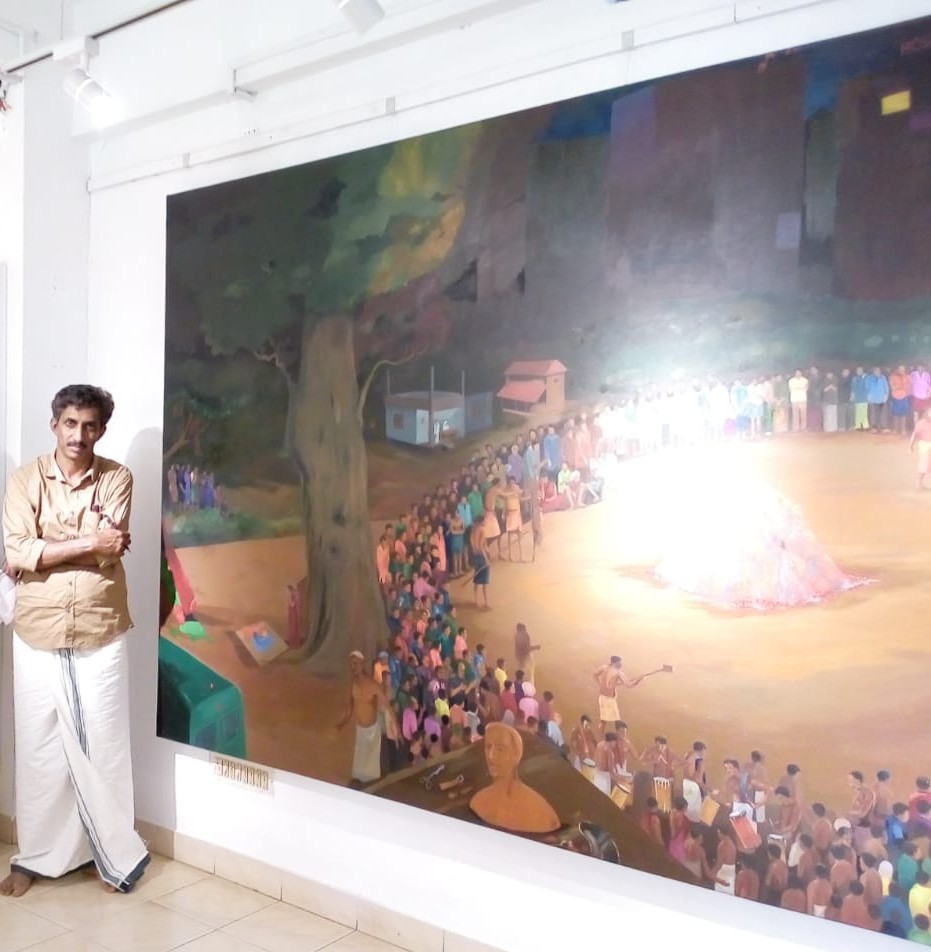
ST's works are unique artistic case studies and so they can also be subjected or treated as cultural case studies. Here ‘illness is’ not at all ‘a metaphor’. Not even death! You cannot see even a passing glance of death or tragic fate here. But the huge structure of hospital erected like walled jail with no windows or ventilators, intended not to treat but to kill you, the ambulance, the hospital bed waiting for a prisoner patient are all seen here. Everyone seems to be waiting for a human made calamity or accident! In one simple and natural looking frame,we wonder how many cases are there awaiting our attention for treatment (or cure )! Anguish, not mere anxiety, is the correct word to express the mood of the work.


So ST' s pictures are not at all fatalistic, spiritualistic or naturalistic. No 'seen or unseen' God-made tragic events are either happening or awaited in these frames. Men and women are there everywhere. But the problem is their form and size. ST's human figures are very problematic. Look at these figures closely. Surely we can differentiate them and their faces. Each man and woman in the picture is doing some thing. They are either talking or acting. But then, why are these figures drawn tiny? Microscopic? Huge canvas and tiny men! This negates the conventional (or comfortable?) belief in 'Humanness'. How can we believe that these petty, tiny, shadow-like men shown in the pictures are our saviours? ST's silences (and screams) signify many problems!

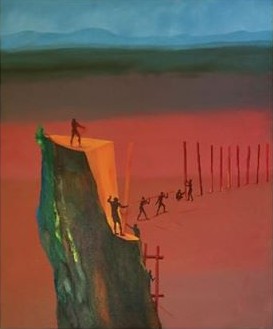
In these works, fire and water are most prominent. So red, the true colour of fire flame, is glowing everywhere. It reminds strongly of our mother earth's womb. Nobody dares to go near or approach the glowing red flame. It looks like sun. An encircled ring is formed around the 'melari' flame. Red, the colour of the fire flame, represents life and death in ST's paintings. Not just that, it is what really generates life and death. So, the encircled men and women are insignificant in their petty forms, foolish talks and absurd actions. Who is willing to approach fire? Who is willing to raise the basic issues of life and death? That is the fundamental question raised by these paintings. Surely, there are some answers. What are the solutions?

In ST's paintings, green and blue are shown as 'remedies'. But the problem is this: can we come out of red flames?, from the all pervading colour of Red?, from the problems of life and death? In ST's picture frames, 'our' nearest colour is red; green is always distant! And blue is far far away in the distant sky. There are exceptions. The 'theyyakkolam', covered with green (leaves) is stepping boldly towards the 'melari' or the red flame. One or two budding leaves are already grown on the other side of the 'bleeding' trunk, while the fencing work is still undergoing. Two or three very small red flowers are seen near the traffic point, near the crowded cars. Yes ,they are there, but negligible. Greenish trees, mountains, bluish sky are distantly present in almost all pictures. Nature mystiques or eco-friendly groups can claim their copyright over the greenish forests and bluish sky in these canvases! Is it truthful? Is it that red and all puzzles of life and death belongs to 'us', 'tiny' common men?, and that nature and sky belongs to the 'privileged' nature lovers? Is there any such division of colours (and viewers) in ST's paintings?


These reflections about ST's paintings will be inconclusive if it does not say any thing about the presence (or absence?)of 'carnival fests' in his works. ‘Carnivalesque character' of an art work is defined and described in a specific sense by Bakthin. Whenever or wherever a popular village festival is seen or read, our 'poor' theorists apply Bakthin's theory of carnivalisation blindly. Art theorists, political analysts, literary critics, film and TV specialists are all in jubilant mood; they are now confident that every social, political, literary and artistic problem can be solved by applying Bakthin's theory. Our 'theorists ' are not aware that Bakthin himself corrected or revised his early theory in his later days. It was in the 1920's, under the autocratic regime of Stalin, that Bakthin developed his theories of carnivalisation, polyphony etc and used them in his critical studies about Rabelais and Dostoevsky. But, after his years of imprisonment, the whole theory was rewritten. ST's paintings are most often typical case studies of village carnivals; his colours and figures minutely follows popular festivals. But the imagery or theory of 'carnivalisation' (in Bakthin's sense) cannot be applied here.If we go behind Bakthin, our reflections will be misguided. So the social and political significance of 'village fests' in ST's canvases are to be explained.

Just like as every truthful work of art, ST's paintings are multidimensional. We are not interested in the 'ultimate' question usually raised by 'prominent' art scholars or critics: whether the work of art is 'great' or not. 'Glorification' is merely a marketing tactic. We are not 'reading' and 're-reading' it for the purpose of art marketing. We are only interested in ST's art, in it's genuineness as a cultural creation (and not a product). So, hypothetically as a first point we raised the clinical dimension of his works. Manifestations of calling for 'emergency ' treatment and cure are seen and heard from each and every part of his frame. ‘We' are bound not only to see and hear but also to cure the 'screaming' being. It may be a man, a river, a tree, a hill or a mountain. In ST's art, 'culture' is the cause of calamities. So, pictures raise emergency calls for 'cultured' man's attention. The 'Humanness' or 'Greatness' of man is a myth, these painting say. Then what is the truth? 'Tinyness', smallness, pettiness, is the ultimate truth. Most of ST's figures are tiny, or mere shadows. Institutional structures, trees, mountains, rivers, fire flame etc are huge. Here Man's presence is insignificant. He is in agony. It is his own making! As a second aspect we put forward the 'philosophical' dimension: fire and water are the basic elementary forces in his work. They represent mother earth's womb; the embodiment of life and death. Man is insignificant here too. Thirdly, the artistic dimension: selection and choice of colours in his art. Nearness of red in the frame. Distant green and blue being presented as remedies. The ideological ambivalence is expressed as an artistic problem of ‘near/far’ presences (or absences) of colours in his paintings.As a fourth and final hypothetical observation, we can now put forward the social and political dimension of ST's art works.


What are the political implications of ST's art? What, which or whose politics are implied in the artist's big canvases? A keen observer could see and feel the political undercurrents in every aspects of his painting. Actually politics itself takes different forms and shapes in his art: clinical, philosophical, artistic and carnivalistic. Formerly, we identified these forms as various dimensions of his art. It makes no real difference whether it is seen as a form or dimension, the core issue is the underlying politics. An hierarchical power relationship is inscribed and asserted in the 'Silent Screams' with very minute details. The glowing fire flame in the centre of the canvas is imagined as the real power centre. In its extreme heat and light it truly represents aggression and destruction. Men (not one woman!, women are only distant onlookers, only 'gossip-mongers') encircled around the central fire enact the role of true, obedient, good 'subjects', or good 'citizens' in the modern sense. But out of the encircled ring, there is darkness. Actually, power is asserted not only by the repressive forces of light and heat in the foregrounded centre; it is applied forcefully through the agonising darkness seen in the ‘backgrounded’ outer ring. Now an ideal hierarchical political power relationship satisfactorily takes shape. The Ruler or Ruling class is in a God like (God sent!) position. It is the real and only SUBJECT. All other tiny insignificant figures are small subjects! They are bound to obey. Convicted to be ruled!

Hospital that looks like a jail with it's huge walled structure shows the murderous violence and naked aggression written on every apparatus of power represented here. People are not in a mood for celebration. Only fear is seen in darkness and in the fiery heat and light, in people's faces (and minds!), in the inmate's faces seen distantly through the windows of the repressive hospital, in the ambulance or in the hospital bed waiting for a casualty or a calamity. A mob surrounded by all the repressive instruments of power! A mob willingly or unwillingly subjected to the repressive forces of power! A lone idol is seen, awaiting people's attention (for salvation!). Only a 'deity' is seen stepping boldly towards the central fire, ready to take any risk and one or two other deities are getting ready. People in the encircled ring reminds us the colosseum spectacle of the Roman past. Sathish's canvas is pregnant with contemporary politics with all it's meanings and absurdities!

Finally, this 'observer' is forced to ask the following question: Is it possible for the people to come out of the inner and outer rings of dominating power forces? Is liberation from the ritualistic silly 'acts' 'and 'talks' possible for the labouring 'tiny' people ? Freedom- Is it a possibility or a reality for the common people? Or a hollow myth created for the only purpose of exploitation?

Saturday, 26 May 2018

പുരോഗമന സാഹിത്യ പ്രസ്ഥാനത്തെ രക്ഷിക്കാനാരുണ്ട്?

എം. പി. ബാലറാം


പുരോഗമന സാഹിത്യപ്രസ്ഥാനം ഇന്ന് 'വ്യക്തിവൽക്കരണ'ത്തിന് പിറകെയാണ്. 'വ്യക്‌തിബിംബ'ങ്ങളിലാണ് അവർ അഭയം കണ്ടെത്തുന്നത്. 'വ്യക്തിവൽക്കരണ' ത്തിന്റെ പക്ഷം ചേർന്ന് നിൽക്കുന്നത് മദ്ധ്യവർഗ്ഗസമൂഹത്തിൽ പ്രസ്ഥാനത്തിന് കൂടുതൽ 'സ്വീകാര്യത'യും 'മാന്യത'യുമുണ്ടാക്കും. പക്ഷെ രൂപീകരണകാലത്തെ പ്രവർത്തനലക്ഷ്യങ്ങളും, ആശയപരമായ പ്രതിബദ്ധതയും ഇല്ലാതാകുന്നതോടെ പ്രസ്ഥാനത്തിന്റെ ശിഥിലീകരണവും ആരംഭിക്കുന്നു. സാമൂഹ്യമായും വർഗ്ഗപരമായും ഉള്ള കൂട്ടായ്മകൾ പ്രസ്ഥാനത്തിന് നഷ്ടപ്പെടുകയാണ്. സാമൂഹ്യവൽക്കരണം, രാഷ്ട്രീയവൽക്കരണം തുടങ്ങിയവയെക്കുറിച്ചു പരാമർശിക്കുന്നത് പോലും അസംബന്ധമാണെന്ന് വന്നിരിക്കുന്നു. പ്രസ്ഥാനത്തിന്റെ വ്യക്തിവൽക്കരണം, സ്വാഭാവികമായും ഭാവുകത്വലോകത്തെയും വ്യക്തിവൽക്കരിക്കുന്നതിലാണ് ചെന്നെത്തുക. സാഹിത്യഭാവുകത്വം വ്യക്തിവൽക്കരിക്കപ്പെടുന്നത്, ആഗോളീകൃതകാലത്തിന്റെ ഒഴിച്ചുകൂടാൻ പറ്റാത്ത ആവശ്യമാണ്. ഇടതുപക്ഷ-വലതുപക്ഷ കാഴ്ചപ്പാടുകൾ തമ്മിലുള്ള വ്യത്യാസത്തെക്കുറിച്ച് പുരോഗമനപക്ഷത്തുള്ളവർ പോലും നിശ്ശബ്ദതപാലിക്കാൻ തുടങ്ങിയിരിക്കുന്നു. ഒടുവിൽ 'ചരിത്ര'വും 'രാഷ്ട്രീയ'വും സാഹിത്യത്തിന് ആവശ്യമില്ലാത്ത അനാവശ്യവസ്തുക്കളാണെന്ന് 'പ്രാമാണിക'രായ ഇടതുപക്ഷ ചിന്തകർതന്നെ അഭിപ്രായപ്പെടുന്ന സ്ഥിതിയുണ്ടായിക്കഴിഞ്ഞിരിക്കുന്നു.

കഴിഞ്ഞ രണ്ട് പതിറ്റാണ്ടുകൾക്കുള്ളിൽ പുരോഗമന സാഹിത്യപ്രസ്ഥാനത്തിലും ഒപ്പം മലയാളസാഹിത്യത്തിലും വളർന്നു ശക്തിപ്പെട്ട പ്രതിഭാസത്തെ (വ്യക്തിവൽക്കരണത്തെ) മനസ്സിലാക്കുകയും എതിരിടുകയും ചെയ്യേണ്ടത് ആവശ്യമാണ്. വ്യക്തിവൽക്കരണം ഒരു യാദൃശ്ചികതയല്ലെന്ന് ആദ്യം തന്നെ തിരിച്ചറിയണം.

കലയിലും ജീവിതത്തിലും വ്യക്തിവൽക്കരണം ഉദാരവ്യക്തിവാദത്തിന്റെ (Liberal Individualism) പുത്തൻ പതിപ്പായി തെറ്റിദ്ധരിപ്പിച്ചു പുനരവതരിപ്പിച്ചത് ഒട്ടും നിരുപദ്രവകരമായല്ല. ആഗോളീകരണത്തിനും നവലിബറലിസത്തിനും കേരളത്തിലെ ഇടതുപക്ഷ സമൂഹത്തിൽ ആധിപത്യം നേടാനുള്ള അവസരമൊരുക്കുകയാണ് ഇന്ന് 'വ്യക്തിവൽക്കരണം'. സാമൂഹ്യവൽക്കരണത്തിനും വർഗ്ഗവൽക്കരണത്തിനുമെതിരായുള്ള പ്രച്ഛന്നരൂപത്തിലുള്ള ആക്രമണമാണിത്. പത്തൊമ്പതാം ശതകത്തിലെ 'ലിബറൽ ഹ്യുമനിസ'ത്തിന്റെ പുനരവതാരമായല്ല 'വ്യക്തികർത്തൃത്വ'ങ്ങൾ  ഇന്ന് പിറവിയെടുക്കുന്നത്. ഗൂഢവും കുടിലവുമായ ഉദ്ദേശ്യലക്ഷ്യങ്ങൾ അതിനുണ്ട്. സാംസ്കാരികമായ പ്രതിരോധശേഷിയെ നശിപ്പിക്കുകയും അങ്ങനെ നിർവ്വീര്യമാക്കപ്പെട്ട സമൂഹമനസ്സിനെ ആക്രമിച്ചു കീഴടക്കുകയും ചെയ്യുകയെന്ന ഗൂഢ ദൗത്യം 'വ്യക്തിവൽക്കരണ'ത്തിലൂടെ നടത്തിയെടുക്കേണ്ടതായുണ്ട്.

ആത്യന്തികമായി ആഗോളമുതലാളിത്ത മൂലധനത്തിന്റെ സർവ്വാധിപത്യത്തിനും ഫാസിസത്തിനും വഴിയൊരുക്കുകയെന്നത് വ്യക്തിവൽക്കരണത്തിന്റെ ദീർഘകാല ലക്ഷ്യമാണ്. അതിനാൽ ആഗോളീകരണയുക്തികൾക്ക് കീഴ്പ്പെട്ട് ജീവിക്കുകയാണ് 'എനിക്ക്' ഉചിതമായത് എന്ന് 'വ്യക്തിവൽക്കരണം' ഒറ്റയൊറ്റ മനസ്സുകളെ ബോധവൽക്കരിച്ചുകൊണ്ടേയിരിക്കുന്നു. രാഷ്ട്രീയമുക്തമായ മധ്യവർഗ്ഗസമൂഹം അത് പരിശുദ്ധപ്രമാണമായി അംഗീകരിക്കുകയും നടപ്പിലാക്കുകയും ചെയ്യുന്നു.

സാമ്രാജ്യത്വ ആഗോളീകരണത്തിന്റെ ഗൂഢതാത്പര്യങ്ങളാണ്, പുരോഗമനസാഹിത്യപ്രസ്ഥാനത്തിന്റെ ഇന്നത്തെ അവസ്ഥക്ക് കാരണമെന്ന് വ്യക്തമാക്കാനാണ് ശ്രമിച്ചത്. 'പുരോഗമന വിരുദ്ധത'യുടേയും 'കമ്മ്യൂണിസ്റ് വിരുദ്ധത'യുടെയും പേരിൽ മുൻപ് ശത്രുപക്ഷത്ത് അകറ്റി നിർത്തിയ ആധുനികതാ പ്രസ്ഥാനത്തിന്റെ ആളുകളെ ഒന്നൊന്നായി പുരോഗമന സാഹിത്യ പ്രസ്ഥാനം പൂവിട്ടു പൂജിക്കുന്ന കാഴ്ച നാം കണ്ടുകൊണ്ടിരിക്കുന്നുണ്ട്. പുരോഗമനാശയങ്ങളുടെ നിർവ്വീര്യതയും പിന്മാറ്റവും പ്രതിലോമചിന്താഗതികളുടെ കടന്നുവരവിന്‌ അനുകൂലമായ സാഹചര്യം സൃഷ്ടിക്കും - ചരിത്രത്തിന്റെ സുനിശ്ചിതമായ പാഠമാണിത്.

'മയ്യഴി'യിലെ തുമ്പികളുടെയും 'ഖസാക്കി'ലെ അപ്പുക്കിളിയുടെ തലയിലെ പേനുകളുടെയും കണക്കെടുക്കാൻ പിറകെ പോകുന്ന ദയനീയ അവസ്ഥയിൽ നിന്ന്, പുരോഗമനസാഹിത്യപ്രസ്ഥാനത്തെ രക്ഷിക്കാൻ ആർക്ക് കഴിയും? ഏറ്റവും ഒടുവിൽ, കണ്ണൂരിൽ നടന്ന പത്തു ദിവസത്തെ 'ടി. പത്മനാഭൻ സാംസ്കാരികോത്സവ'ത്തിലാണ് പ്രസ്ഥാനം അതിന്റെ സാന്നിദ്ധ്യമറിയിച്ചത്. സംഗീതമേളകൾ, ചിത്രകാരക്കൂട്ടായ്മകൾ, സാക്ഷാൽ മുതുകാടിന്റെ മാന്ത്രിക വിദ്യകൾ, പോരാത്തതിന് ചലച്ചിത്രതാര സുന്ദരികളുടെ നൃത്തചുവടുകളും - മാർച്ച് മാസത്തിൽ കെട്ടിയാടിയ വടക്കേമലബാറിലെ മറ്റേതൊരു തിറയുത്സവത്തെയും തോൽപ്പിക്കാൻ 'പത്മനാഭൻ ഉത്സവ'ത്തിന് സാധിച്ചിരിക്കുന്നു. ടി പത്മനാഭൻ ജീവിച്ചിരിക്കെത്തന്നെ ഒരു തിറയാട്ടക്കോലമായി പ്രതിഷ്ഠിക്കപ്പെട്ടിരിക്കുന്നു. മാഫിയകളും അധികാര രാഷ്ട്രീയവും വാണിഭ ശക്തികളും ഒത്തുചേരുമ്പോൾ സംഭവിക്കുന്ന അത്ഭുതകരമായ 'വികസന' മാതൃകക്ക് നമ്മുടെ കൺമുന്നിൽത്തന്നെ ഉദാഹരണം ഉണ്ടായിക്കഴിഞ്ഞിരിക്കുന്നു. പുരോഗമന സാഹിത്യപ്രസ്ഥാനത്തിന് ഇതിലെ സജീവമായ പങ്കാളിത്തം കൊണ്ട് 'വിപ്ലവകരമായ' തങ്ങളുടെ 'കർത്തവ്യം' നിറവേറ്റി എന്ന് അഭിമാനിക്കാം. വ്യക്തിയുടെ സ്വാതന്ത്യം, വ്യക്തിയുടെ ഭാവന, വ്യക്തിയുടെ മാഹാത്മ്യം, വ്യക്തിയുടെ ഓർമ്മകൾ, വ്യക്തിയുടെ ജീവിതം - ടി പത്മനാഭൻ കഥകളിൽ തിരിച്ചും മറിച്ചും കൂട്ടിയും കിഴിച്ചും ഹരിച്ചും ഗുണിച്ചും വീണ്ടും വീണ്ടും പകർത്തിയെഴുതിയും ആവർത്തിക്കപ്പെട്ട ഒരൊറ്റ വ്യക്തിയുടെ ഊതിവീർപ്പിച്ച സങ്കൽപലോകമാണല്ലോ, പുരോഗമന സാഹിത്യപ്രസ്ഥാനം ഒടുവിൽ ചെന്നെത്തിനിൽക്കുന്ന ആദർശലോകം. ഒരാൾക്ക് മെഗലോമാനിയ (ആത്മ മഹത്വബോധം) പിടിപെടുമ്പോൾ ചികിത്സക്ക് വിധേയമാക്കാം. പണ്ടത്തെ ജീവത്സാഹിത്യ പ്രസ്ഥാനത്തിന്റെയും ആദ്യകാല പുരോഗമനസാഹിത്യ പ്രസ്ഥാനത്തിന്റെയും മഹത്തായ പൈതൃകമവകാശപ്പെടുന്ന ഒരു സംഘടനക്ക് ഇതേ രോഗം (വ്യക്തി മഹത്വബോധം) ബാധിക്കുമ്പോൾ അതിനെ രക്ഷിക്കാനാരുണ്ട്?   

Saturday, 19 November 2016

നരഭോജികൾ വീട്ടുമുറ്റത്ത്!

എം. പി. ബാലറാം


ജീവനുള്ള ഓരോ ശരീരത്തേയും ഓരോ മനസ്സിനേയും ഫാഷിസം പരീക്ഷണവസ്തുവാക്കുന്നുണ്ട്. ഉറങ്ങുന്ന  ഓരോ ശരീരത്തേയും ഓരോ മനസ്സിനേയും ഞെട്ടിച്ചുണർത്തുന്നു. ആട്ടിത്തെളിച്ചു തെരുവിലെത്തിക്കുന്നു. ഒരു രാത്രികൊണ്ട്, അല്ലെങ്കിൽ ഒരൊറ്റ രാപ്പകൽ കൊണ്ട് ജനതയെ ആൾക്കൂട്ടമാക്കി മാറ്റുന്നു. ജനാധിപത്യ-സ്വാതന്ത്ര്യ-സമത്വവാദികൾ, വ്യക്തിവാദക്കാർ, കമ്മ്യൂണിസ്റ്റ് വിപ്ലവകാരികൾ, ജാതിമതവിശ്വാസക്കാർ, അവിശ്വാസികൾ ഇവരെയെല്ലാം ഭേദചിന്തകൾ കൂടാതെ വരിവരിയായി പുറത്തളത്തിൽ ഒന്നിപ്പിക്കുന്ന ജാലവിദ്യയാണ്‌ അരങ്ങേറുന്നത്. നാടിൻറെ രാഷ്ട്രീയബോധത്തെ എച്ചിൽക്കൂട്ടങ്ങളുടെ അവശിഷ്ടങ്ങളുടെ മുൻപിൽ എത്തിക്കുന്ന രാസപരീക്ഷണത്തെ എതിരിടാൻ ഏവരും തയ്യാറാവേണ്ടതുണ്ട്.


മഹത്വത്തെക്കുറിച്ച് പറഞ്ഞുകൊണ്ടേയിരിക്കുക എന്നതാണ് ഫാഷിസത്തിന് എക്കാലത്തും പഥ്യമായത്. എന്റെ രാജ്യം, എന്റെ മതം, എന്റെ സംസ്കാരം, എന്റെ ജാതി, എന്റെ ഭാഷ, എന്റെ ചരിത്രം - എല്ലാറ്റിനെയും മഹത്വത്തിൽ കുളിപ്പിക്കുന്നു. അലങ്കൃതമായ കുപ്പായം ധരിച്ച് എന്റേതായതെല്ലാം മഹത്വവൽക്കരിക്കപ്പെടുന്ന കാഴ്ച കണ്ട് ഏവരുടെയും കൺകുളിർക്കുന്നു. മഹത്വമില്ലാത്തതാർക്കാണ്? നിന്റെ രാജ്യം, നിന്റെ മതം, നിന്റെ സംസ്കാരം, നിന്റെ ചരിത്രം ... നിന്റേതെലാം മ്ലേച്ഛം. എന്റെ X നിന്റെ എന്ന വിപരീതം കൊണ്ട് ശരീരത്തെയും മനസ്സുകളെയും രണ്ടാക്കി പകുത്തുമുറിക്കുന്ന പ്രക്രിയയെയാണ് ഫാഷിസം എന്ന് വിളിക്കുന്നത്. വെറും തൂലിക കൊണ്ടെഴുതപ്പെട്ട് ഇവ കടലാസ്സിലൊതുങ്ങിനിൽക്കുന്നില്ല. 'വിപരീതങ്ങൾ' കത്തികൊണ്ടും വെടിമരുന്നുകൊണ്ടുമാണ് നീതി നടപ്പാക്കുന്നത്. അനിവാര്യമായ നീതിനടത്തിപ്പായി ഇത് ചരിത്രത്തിൽ ആവർത്തിക്കപ്പെടുന്നുണ്ട്. ഒരു ജനതയുടെയാകെ മനസ്സുകളിലും ശരീരങ്ങളിലും മഷിപതിപ്പിച്ച് പെരുങ്കള്ളന്മാരും കുറ്റവാളികളുമാക്കിത്തീർക്കുന്ന പരീക്ഷണം ഇന്ത്യൻ ഫാഷിസത്തിന് പുതിയ മാനങ്ങൾ നൽകുന്നു.


വേലയും കൂലിയും ഇല്ലാതായിത്തീർന്ന, വിളയ്ക്ക് വില നഷ്ടപ്പെട്ട, രോഗവും വാർദ്ധക്യവും മരണവും എന്നും വിളയാടുന്ന ഗ്രാമങ്ങളോടും നഗരങ്ങളോടും അധികൃതർ ചോദിക്കുന്നു: നിങ്ങൾക്കെന്തുവേണം? ഭക്ഷണമോ ഭാഷണമോ? പാവങ്ങൾക്ക് പട്ടിണിമാറ്റാൻ അന്നമാണാവശ്യം. ഒരു ന്യൂനപക്ഷത്തിന് ഭാഷണം മാത്രം മതി. ഭക്ഷണത്തെ ഭാഷണം കൊണ്ട് മറയ്ക്കുന്ന (മറക്കുന്ന) ജാലവിദ്യ ഇവിടെയും തുടങ്ങിക്കഴിഞ്ഞു. തീ തുപ്പുന്ന വാക്കുകൾ കൊണ്ട്, മയക്കുന്ന അലങ്കാരങ്ങൾ കൊണ്ട്, പ്രസംഗപാടവം കൊണ്ട് എരിയുന്ന വയറുകൾ നിറക്കപ്പെടുമെന്നാണ് പ്രത്യാശിക്കുന്നത്.


ഡിമോണെറ്റൈസേഷനകത്ത് (demonetisation) ഒരു പിശാച് (demon) മറഞ്ഞിരിപ്പുണ്ട്. കല്ലിലും തൂണിലും മറഞ്ഞുകിടന്ന പുരാവൃത്തത്തിലെ നരസിംഹത്തെപോലെ, അല്ലെങ്കിൽ പഴങ്കഥയിലെ ജാലവിദ്യക്കാരന്റെ കുടത്തിലൊളിച്ച ഭൂതത്തെപ്പോലെ. പുറത്തുചാടുന്ന ഭൂതം ആദ്യം കഥകഴിക്കുന്നത് ജാലവിദ്യക്കാരനെത്തന്നെയാണ്. ഇതാണ് ഫാഷിസത്തിന്റെ അനുഭവപാഠം. ആദ്യം ദുരന്തമായും പിന്നെ പ്രഹസനമായും ആവർത്തിക്കപ്പെടാൻ ഡിമോണെറ്റൈസേഷൻ എന്ന വർത്തമാനനാടകത്തിന്റെ ശില്പികൾക്ക് അധികനാൾ കാത്തിരിക്കേണ്ടിവരില്ല.    

Tuesday, 20 September 2016

ഇടം പ്രതികരണങ്ങൾ

ഒന്ന്


'ബ്രണ്ണൻ 125': തമസ്കരണം ഒരു ആരാച്ചാർപണിയാണ്


കുഞ്ഞപ്പ പട്ടാന്നൂർ                        

ഒരു കപ്പൽഛേദത്തിൻറെ  ബാക്കിപത്രത്തിൽ എഴുതപ്പെട്ടതാണ് ബ്രണ്ണൻ എന്ന മഹാവിദ്യാലയത്തിൻറെ ജീവചരിത്രം: തിരകൾക്കപ്പുറം അപരദേശത്ത് പിറന്നു വളർന്ന ഒരു മനുഷ്യൻ വിധിവശാൽ അറബിക്കടലോരത്തെ  കിഴക്കൻദേശങ്ങളിൽ ഒരിടത്ത്- തലശ്ശേരി എന്നപേരുള്ള ഈ ദേശത്ത്-കരയടുത്ത വിധി ദിനത്തിൽ ബ്രണ്ണൻ
വിദ്യാലയത്തിൻറെ ചരിത്രം  ആരംഭിക്കുന്നു.

ആ ചരിത്രത്തിൻറെ 125 - ആം  വാർഷികം ഓർമപെരുനാളിന്റെ ആർഭാടങ്ങളോടെ ആഘോഷിക്കപ്പെടുമ്പോൾ ഉയരുന്ന ചോദ്യമുണ്ട്: ബ്രണ്ണന്റെ ഓർമ്മപ്പെരുനാൾ ആഘോഷിക്കാൻ അർഹതപ്പെട്ടവരാര്? അഥവാ, ആരാണ് ബ്രണ്ണൻ ഭാഗധേയത്തിന്റെ ഈ വർത്തമാനകാലത്തെ യഥാർത്ഥ അവകാശികൾ?

'ഭൂമിയുടെ അവകാശികൾ ആര്?' എന്ന ബഷീറിയൻ ചോദ്യത്തിന്റെ വലിയ മാനങ്ങളിലേക്ക് പോകാതെ തന്നെ ഇന്ന് ജീവിച്ചിരിക്കുന്ന ഓരോ 'ബ്രണ്ണനൈറ്റി'നും ബ്രണ്ണൻ ഭാഗധേയത്തിന്റെ അവകാശികളാര് എന്ന പ്രസക്തമായ ചോദ്യമുന്നയിക്കാനും ഉത്തരം തേടുവാനും ഉത്തരവാദിത്തമുണ്ട്.

പല തലമുറകൾ നടന്നുതീർത്ത ദൂരങ്ങളാണ് ബ്രണ്ണന്റെ ചരിത്ര ദൂരങ്ങൾ. എണ്ണമറ്റ ജീവിതങ്ങളുടെ പാദമുദ്രകൾ പതിഞ്ഞു കിടപ്പുണ്ട് ബ്രണ്ണന്റെ ചരിത്ര വഴികളിൽ. അവർക്കൊക്കെയും അവകാശപ്പെട്ടതാണ് ബ്രണ്ണൻ എന്ന മഹാപൈതൃകത്തിന്റെ നേരവകാശം.

വിധിഭാഗധേയങ്ങളുടെ ഒസ്യത്തുപോലെ, എഡ്വേർഡ് ബ്രണ്ണൻ നമ്മൾക്കായി തന്നുപോയ ഒരു മഹാസ്വപ്നമുണ്ട്: മത-ജാതി-വംശ-വർണ്ണ ഭേദങ്ങളേതുമില്ലാതെ വിവേചനങ്ങൾക്കപ്പുറം എല്ലാ മനുഷ്യരുടെയും മക്കൾക്കായി വിദ്യ പകർന്നു കൊടുക്കുക എന്ന മഹാസ്വപ്നം!

ആ മഹാസ്വപ്നത്തിന്റെ സാക്ഷാൽക്കാരത്തിന്റെ 125 - ആം ഓർമപെരുനാൾ ആഘോഷിക്കപ്പെടുമ്പോൾ ഓർമ്മപ്പുസ്തകത്തിന്റെ താളുകളിൽ അടയാളപ്പെടുത്തേണ്ട നേരുകളെന്ത്?

തുല്യതാബോധത്തിലും സ്നേഹോദാരതകളിലും സമ്പന്നമായ ബ്രണ്ണൻ ക്യാമ്പസ് പ്രചോദിപ്പിച്ച വലിയ സങ്കല്പങ്ങൾ ഉള്ളിലേറ്റെടുത്തു പുറംലോകത്തിന്റെ വിശാലമായ തുറസ്സുകളിലേക്ക് സഞ്ചരിച്ചവർ. സാംസ്കാരിക-സർഗ്ഗാത്മക മേഖലകളിലും സാമൂഹിക-രാഷ്ട്രീയ-ധൈഷണിക രംഗങ്ങളിലും തങ്ങളുടേതായ സംഭാവനകൾ സാക്ഷാൽക്കരിച്ചർ. അവർ പലരുണ്ട്. പല തലമുറകളിൽ പെട്ടവർ - ഇവരൊക്കെയും ബ്രണ്ണൻ ഭാഗധേയത്തിന്റെ നേരവകാശികൾ!

ശതോത്തരി എന്ന് നാമകരണം ചെയ്യപ്പെട്ട 125 - ആം വാര്ഷികത്തിന്റെ ഭാഗമായി പ്രസിദ്ധീകരിക്കപ്പെട്ട സ്മരണിക: ഈ സ്മരണിക ഒരു ചരിത്ര രേഖയാണ്, അഥവാ ചരിത്ര രേഖയായി തീരാവുന്ന ഓർമ്മകളുടെ ലിഖിതശേഖരം.

ഇത്തരമൊരു ഓർമ്മപ്പുസ്തകത്തിൽ 125 വർഷം ദൈർഘ്യമേറിയ ചരിത്രത്തിന്റെ ചരൽപ്പാതയിലൂടെ നടന്നുകേറിയ കാൽപ്പാടുകൾ മുഴുവൻ അടയാളപ്പെടുത്തുക അസാധ്യമാണ്. പലതലമുറകൾക്കായി വീതിക്കപ്പെടേണ്ട അനുഭവങ്ങളുടെ ആൽബത്തിൽ എല്ലാ അനുഭവങ്ങളും ആലേഖനം ചെയ്യുക എന്നതും പ്രയാസകരമാണ്, സമ്മതിക്കുന്നു.

എന്നാൽ കാര്യങ്ങൾ നേരാംവണ്ണം നിർവ്വഹിക്കുക എന്ന ഒരു നേർവഴി ഉണ്ടല്ലോ. ഈ നേരാംവഴി 'ബ്രണ്ണൻ 125' എന്ന ഓർമ്മ പുസ്തകത്തിൽ നിർവ്വഹിക്കപ്പെട്ടില്ല എന്ന വാസ്തവത്തെ നമ്മൾ എവ്വിധം തിരിച്ചറിയണം?

ഈ 'സ്മരണിക'യിൽ സ്മരിക്കപ്പെടേണ്ട പേരുകൾ പലതും പരാമർശിക്കപ്പെട്ടിട്ടുണ്ട്. എന്നാൽ, പരാമർശിക്കപ്പെടേണ്ട ചില പേരുകൾ ബോധപൂർവ്വം വിട്ടുകളഞ്ഞിട്ടുണ്ട്. എന്ത് കൊണ്ട്?

അഭിമുഖങ്ങളായും ആത്മഗതങ്ങളായും ജീവചരിത്രക്കുറിപ്പുകളായും (ഛായാപടങ്ങൾക്കൊപ്പം) പ്രസക്തമായ പലർക്കും ഈ സ്മരണികയിൽ ഇടം കൊടുത്തിട്ടുണ്ട്, ശരിയാണ്. എന്നാൽ അത്രതന്നെ പ്രസക്തരായ, ഒരുവേള അതിലും പ്രസക്തരായ ചിലരുടെ ജീവിതങ്ങളും ജീവിതസംഭാവനകളും തമസ്ക്കരിക്കപ്പെട്ടിരിക്കുന്നു - തമസ്ക്കരണം ഒരു ആരാച്ചാർ പണിയാണെന്ന് ഓർക്കേണ്ടവർ ഓർക്കണം.

ഒരു കാര്യം അടിവരയിട്ട് പറഞ്ഞു വെക്കട്ടെ: ഒരു മഹാവിദ്യാലയത്തിന്റെ 125 വർഷത്തിന്റെ ചരിത്രം ആലേഖനം ചെയ്ത് സൂക്ഷിക്കാനുള്ള ചുമതല ഏൽപ്പിക്കപ്പെട്ടവർ എന്തുകൊണ്ടോ ബ്രണ്ണൻ എന്ന മഹാപൈതൃകം ആവശ്യപ്പെടുന്ന നേരും നെറിയും കാത്തുസൂക്ഷിക്കാൻ മറന്നു പോയിരിക്കുന്നു.


രണ്ട്


ചേരമാങ്കോട്ടയിലെ ഒച്ചുകൾ


സുകുമാർ അണ്ടലൂർ 

1. ഒച്ചുകൾ 


ചരിത്രം 
അയവെട്ടുന്ന 
ചേരമാങ്കോട്ടയിൽ
ഒച്ചുകളിഴയുന്നു
അജ്‍ഞതയുടെ 
പുറന്തോടിനുള്ളിൽ 
അവ ഞെളിയുന്നു
ജീർണ്ണതയുടെ ഗന്ധം നുണഞ്ഞു
പെരുമാളുടെ സിംഹാസനത്തിൽ 
കയറിയിരിക്കുന്നു
സംസ്കാരത്തിന്റെ 
സ്മരണികയിലൊത്തുകൂടി 
ഇണചേർന്ന് 
പെറ്റുപെരുകുന്നു 
എഴുത്തോലപേജുകൾ
തിന്നുതീർക്കുന്നു
പഴയ 
പൂമുഖപ്പടിയിലെ 
വഴുവഴുപ്പിൽ 
പിന്നെയും 
കാവൽ കിടക്കുന്നു. 

2. സംഗീതശില്പം - ബ്രണ്ണന് ഒരു ഗീതം.

എഡ്വേർഡ് ബ്രണ്ണൻ 
എഡ്വേർഡ് ബ്രണ്ണൻ 
റോയൽ ബ്രണ്ണൻ!
നിന്നുടെ സ്വരരാഗ 
നിർഭര ഹൃദയം -
ഞങ്ങൾക്ക് വരദാനം 
- ഞങ്ങൾ ബ്രണ്ണന്റെ മക്കൾ!
ഓർമ്മകൾ പെയ്യുന്ന 
മോഹങ്ങൾ തളിർക്കുന്ന 
ലഹരികൾ പൂക്കുന്ന പൂങ്കാവനം 
- ഇത് നമ്മുടെ ശാന്തിവനം.
          കപ്പൽഛേദ
          ക്കണ്ണീർക്കഥയുടെ 
          മുത്തുകൾ വാരിവന്നവനേ 
          അറിവിൻ കുന്നുകൾ 
          കയറി വരുന്നോർ -
          ക്കാശ്രയമല്ലോ നിൻ മുറ്റം
ഇവിടെ ജ്ഞാന-
-വിജ്ഞാനത്തിൻ
ക്ഷീരപഥങ്ങൾ തെളിയുന്നു
ഇവിടെ പ്രണയം 
വർണ്ണമയൂര-
പ്പീലികളായി വിടരുന്നു 
          ഗുരുമന്ത്രങ്ങളിൽ 
          നിറഞ്ഞുനിൽപ്പൂ 
          പെരിയ ജീവിത
           രസതന്ത്രം.
           തളർന്ന പഥികൻമാരേ,
           വന്നിത്തണലിൻ
           സ്നേഹമറിഞ്ഞേപോ!
എഡ്വേർഡ് ബ്രണ്ണൻ 
എഡ്വേർഡ് ബ്രണ്ണൻ 
റോയൽ ബ്രണ്ണൻ!
നിന്നുടെ സ്വരരാഗ 
നിർഭര ഹൃദയം -
ഞങ്ങൾക്ക് വരദാനം 
- ഞങ്ങൾ ബ്രണ്ണന്റെ മക്കൾ!
ഓർമ്മകൾ പെയ്യുന്ന 
മോഹങ്ങൾ തളിർക്കുന്ന 
ലഹരികൾ പൂക്കുന്ന പൂങ്കാവനം 
- ഇത് നമ്മുടെ ശാന്തിവനം.

(സ്മരണിക കമ്മിറ്റി  ആവശ്യപ്പെട്ട്  നൽകിയ സംഗീതശിൽപ്പം. തുടർന്ന് ഇത് നിരാകരിക്കപ്പെട്ടു.)

സുകുമാർ അണ്ടലൂർ - 1975 ൽ ബ്രണ്ണൻ കോളേജിൽ നിന്ന് ബിരുദം. പ്രധാന കൃതികൾ - കോളേജ് കൊളാഷ്, മണിച്ചിത്രത്താഴ്.